


Market Update: Edgy investors
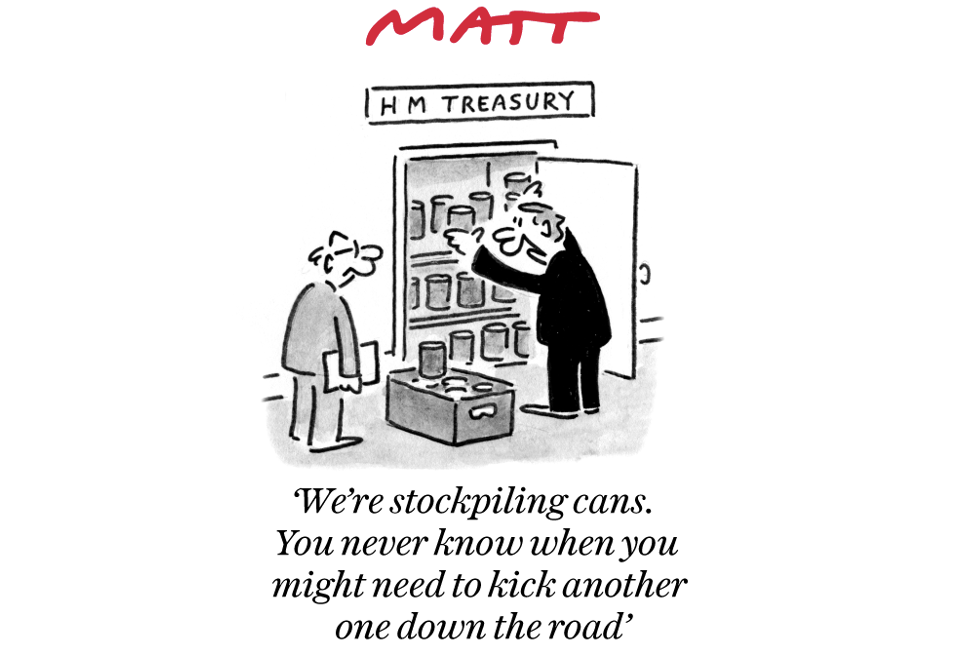
Overloaded with unknowns
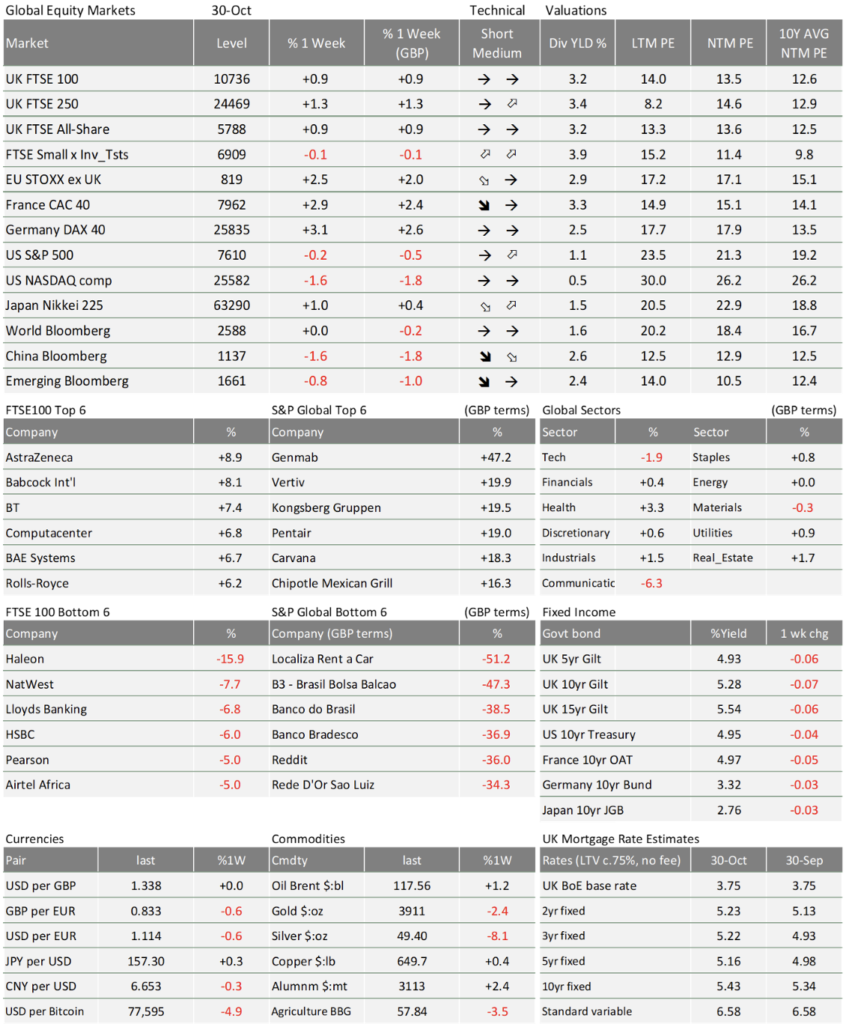
Stock markets recovered in the early part of last week, and 10-year government bond yields fell close to or below the 5% threshold. Then, Google owner Alphabet issued a quarterly earnings statement that worried investors – sending its share price down 13% on Thursday. The fall reverberated through US tech stocks, proving that investor sentiment is still brittle.
Broader earnings reports gave plenty of reasons to be positive, but investors feel there are currently too many unknowns to make firm decisions either way. One of those unknowns is this week’s US midterm election. Once that is done, all eyes will turn back to the Middle East conflict – and perhaps the blockbuster IPO of AI firm Anthropic. Many investors are still waiting for assurance before jumping back in.
Healey unveils a truly mini budget
Holders of UK assets have adopted a ‘wait and see’ approach, ahead of Chancellor John Healey’s autumn budget. We wrote last week that it would likely be a non-event, given the constraints around the Treasury. That proved more or less correct.
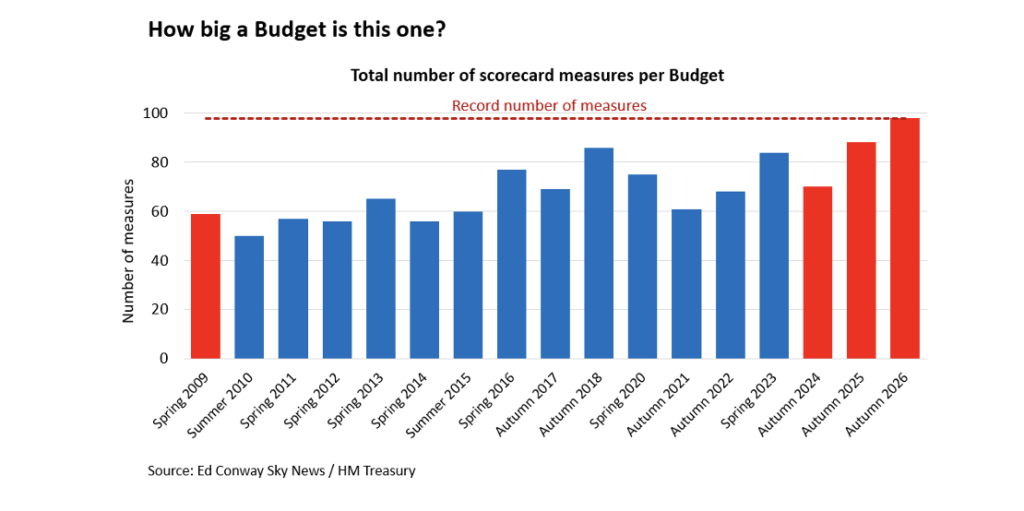
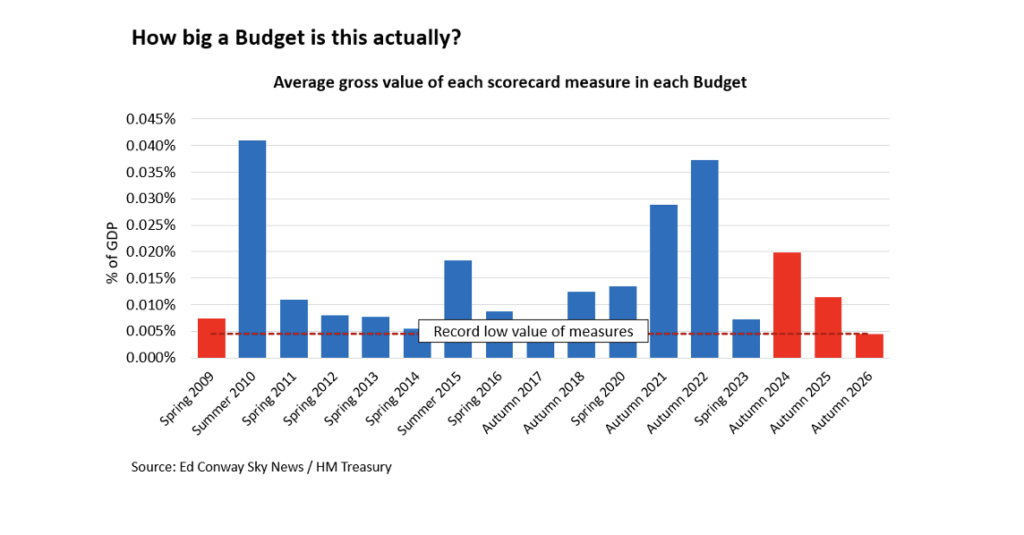
Healey’s budget was actually one of the busiest ever, in terms of the raw number of measures announced. But, the average value of those measures – in terms of spending or revenue – was tiny. There were some small revenue raisers, like the increased surcharge on banks, as well as some positive news for savers: the tax-free allowance on cash ISAs will remain at £20,000, rather than the planned reduction to £12,000. Otherwise, this was finally a budget worthy of the ‘mini’ moniker.
The budget also meant a reduction in the Treasury’s fiscal headroom. This is not a bad thing per se (headroom is there to be used) but it does make UK government finances more precarious. We have had welcome relief in government bond yields recently but – if the rumours of a post-midterm US bombing campaign in Iran are true – that could quickly change. If yields spike again, higher government debt interest payments would likely remove any remaining headroom.
Clearly, Healey felt unable to make any sweeping tax or spending changes, hamstrung by Labour’s 2024 manifesto commitments and his own MPs. Because of those constraints, many suspect Prime Minister Burnham might call another general election next year.
Mixed results for tech; investors wait for Anthropic
Last week’s doubts about AI stocks eased early in the week, helped by stellar quarterly earnings results from Korean semiconductor manufacturer SK Hynix. Google/Alphabet’s results soured the mood, with search revenue growth coming in below analyst expectations at just 12%. But investors particularly disliked Alphabet’s negative cashflow – overdrawing $9.1bn in the third quarter of 2026. AI investments can no longer be financed from regular income, but require external financing (like mortgaging a house).
Broader US tech stocks were hit as a result, but the brunt of the selling fell on Alphabet’s shares. This is partly unique to Google: its core search engine revenue is now losing out to its own AI query segment – described by some as Google cannibalising itself. The deeper worry applies not only to Google, though. How will the advertising revenue that has sustained big tech platforms adjust to the new AI search model?
Alphabet’s biggest positive was a 103% gain in cloud computing sales. But it probably did not help that the tech giant issued its results at the same time as Microsoft, which beat free cashflow estimates to the tune of $10bn. Microsoft shares were initially rewarded, but they also got caught up in Thursday’s sell-off. Still, Alphabet’s underperformance shows that investors are currently prioritising cashflow over AI spending, having become more nervous about likely profitability.
The bigger test of investors’ confidence in AI will be the initial public offering (IPO) of Claude maker Anthropic – currently scheduled for mid-November. Some of the reported numbers around Anthropic’s IPO look outlandish (a $1.5tn-$2tn valuation, despite currently losing billions) but they are no more out of this world than SpaceX’s record-breaking IPO back in June. The IPO will signal how the AI investment theme is going.
Markets need the midterms over with
The US Federal Reserve’s interest rate decision on Wednesday was, like the UK budget, a non-event. As widely expected, the central bank held rates steady and revealed little. Nevertheless, markets’ implied view is for a US rate hike in December, with possibly two more in 2027. Inflation is still well above the Fed’s 2% target, and US GDP growth was an annualised 3.4% in the third quarter, beating expectations. Fed chair Warsh was previously accused of being hawkish (preferring higher rates) but commentators now call him a dove.
US business investment has been strong for a long time, thanks to AI infrastructure spending. The surprise last week was that consumer confidence is also strong. That is unique to the US: businesses are spending everywhere, but most nations’ consumers are feeling down (particularly in France).
President Trump took credit for the consumer confidence bump, but it probably will not help his Republican Party in this week’s midterm elections. Republicans are practically certain to lose control of the House of Representatives, and are increasingly likely to lose the Senate too. That would hamstring Trump for the remainder of his term – making him a lame duck president.
Many worry that Trump might challenge or try to nullify the election results – though few think he would be successful. We suspect that results will not be challenged if opposition Democrats only manage to wrest control of the House, or if Democrats win both chambers by such a landslide as to make rejecting them a lost cause. The middle ground of a close call in the Senate is probably where the danger lies.
Markets are also rife with rumours of a post-election strike on Iran, which is why crude oil has quietly risen to $113 per barrel, close to its highest price since the US and Israel launched their attacks. Those anxieties are not helped by uncertain election results in Israel, which yielded no clear majority (though Netanyahu’s bloc has the most seats). Until midterm uncertainties clear up, markets could struggle. Hopefully, some of the fog will clear by next week.
This week’s writers from Tatton Investment Management:
Lothar Mentel
Chief Investment Officer
Jim Kean
Chief Economist
Astrid Schilo
Chief Investment Strategist
Isaac Kean
Investment Writer
Important Information:
This material has been written by Tatton and is for information purposes only and must not be considered as financial advice. We always recommend that you seek financial advice before making any financial decisions. The value of your investments can go down as well as up and you may get back less than you originally invested.
Reproduced from the Tatton Weekly with the kind permission of our investment partners Tatton Investment Management
Who are Vizion Wealth?
 Our approach to financial planning is simple, our clients are our number one priority and we ensure all our advice, strategies and services are tailored to the specific individual to best meet their longer term financial goals and aspirations. We understand that everyone is unique. We understand that wealth means different things to different people and each client will require a different strategy to build wealth, use and enjoy it during their lifetimes and to protect it for family and loved ones in the future.
All of us at Vizion Wealth are committed to our client’s financial success and would like to have an opportunity to review your individual wealth goals. To find out more, get in touch with us – we very much look forward to hearing from you.
The information contained in this article is intended solely for information purposes only and does not constitute advice. While every attempt has been made to ensure that the information contained on this article has been obtained from reliable sources, Vizion Wealth is not responsible for any errors or omissions. In no event will Vizion Wealth be liable to the reader or anyone else for any decision made or action taken in reliance on the information provided in this article.
